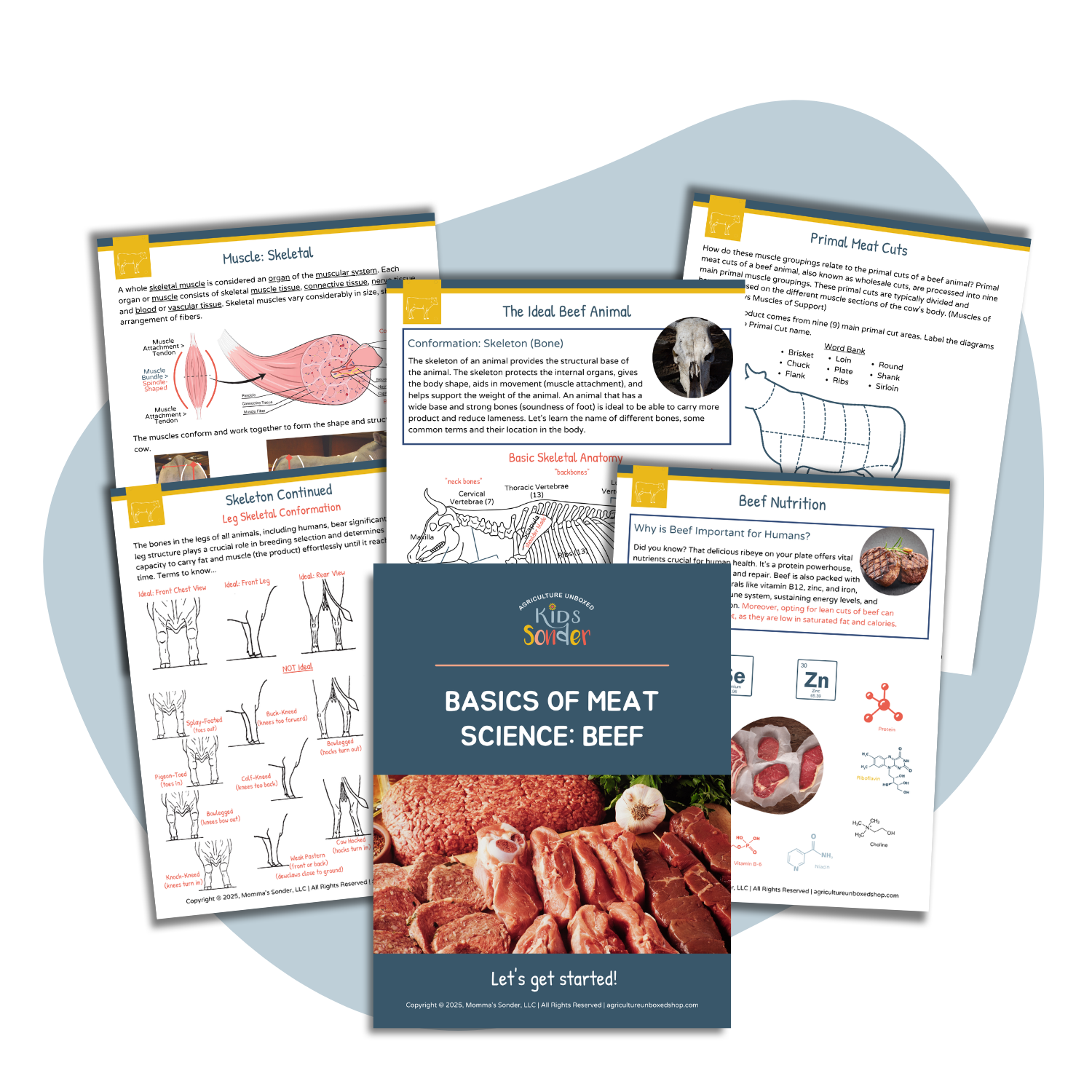

Basics of Meat Science: Beef (Printable PDF)
Basics of Meat Science: Beef (Printable PDF)
Couldn't load pickup availability
Recommended Age: 9–15
Format: Printable PDF
Learning Level: Beginner / Intermediate
Suggested Companion Resource: This resource is designed to complement Beef Meat Cut Identification Flashcards and can be used alongside it for a more complete learning experience.
Recommended Ages: 9+
Suggested Grade Band: Grades 4–10
Format: Printable PDF
Learning Level: Beginner–Advanced
Note: This product is also part of the Animal Science Foundations Bundle and Meat Science Bundle
UNIT OVERVIEW
Explore the science behind beef—from anatomy to the dinner table—with this comprehensive learning guide.
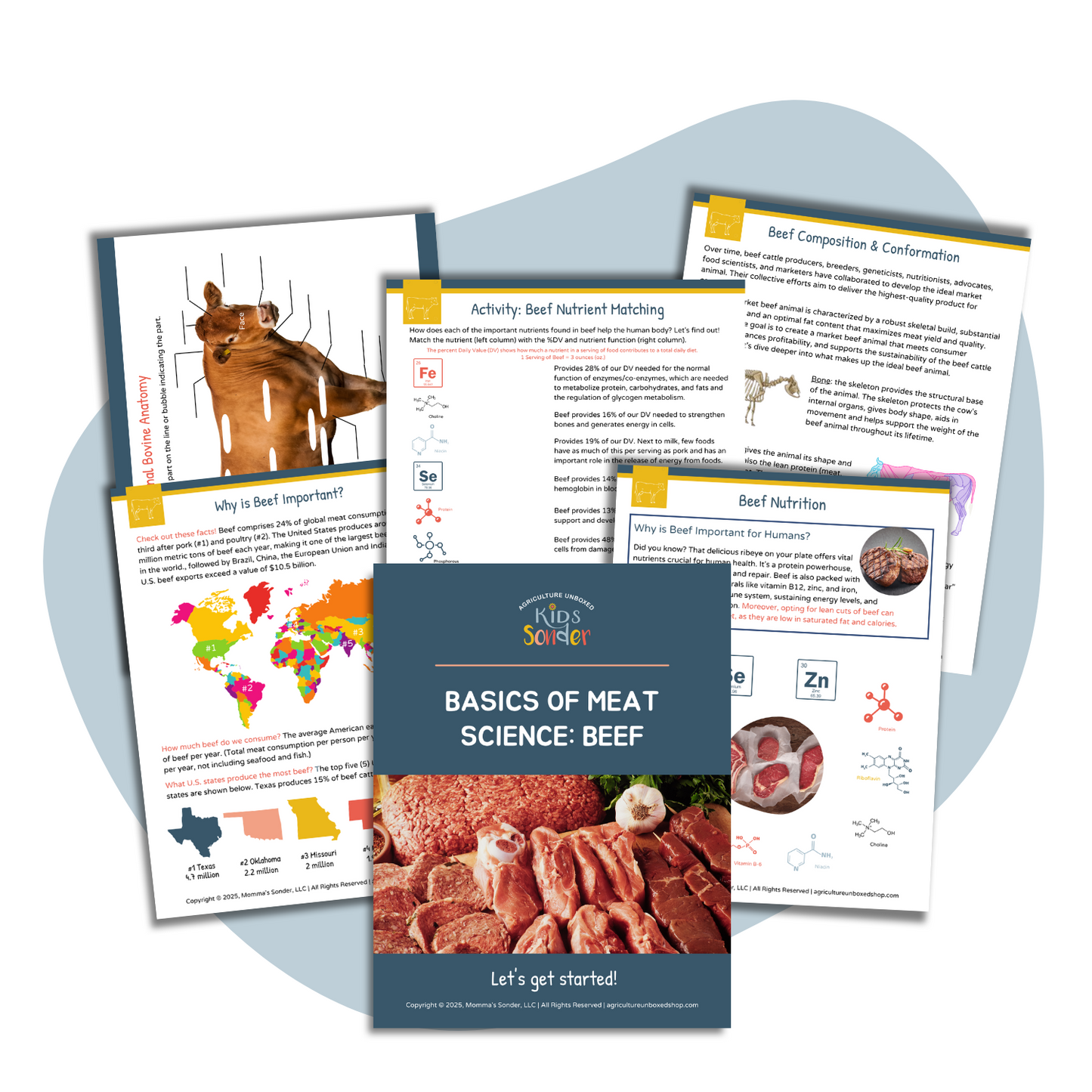
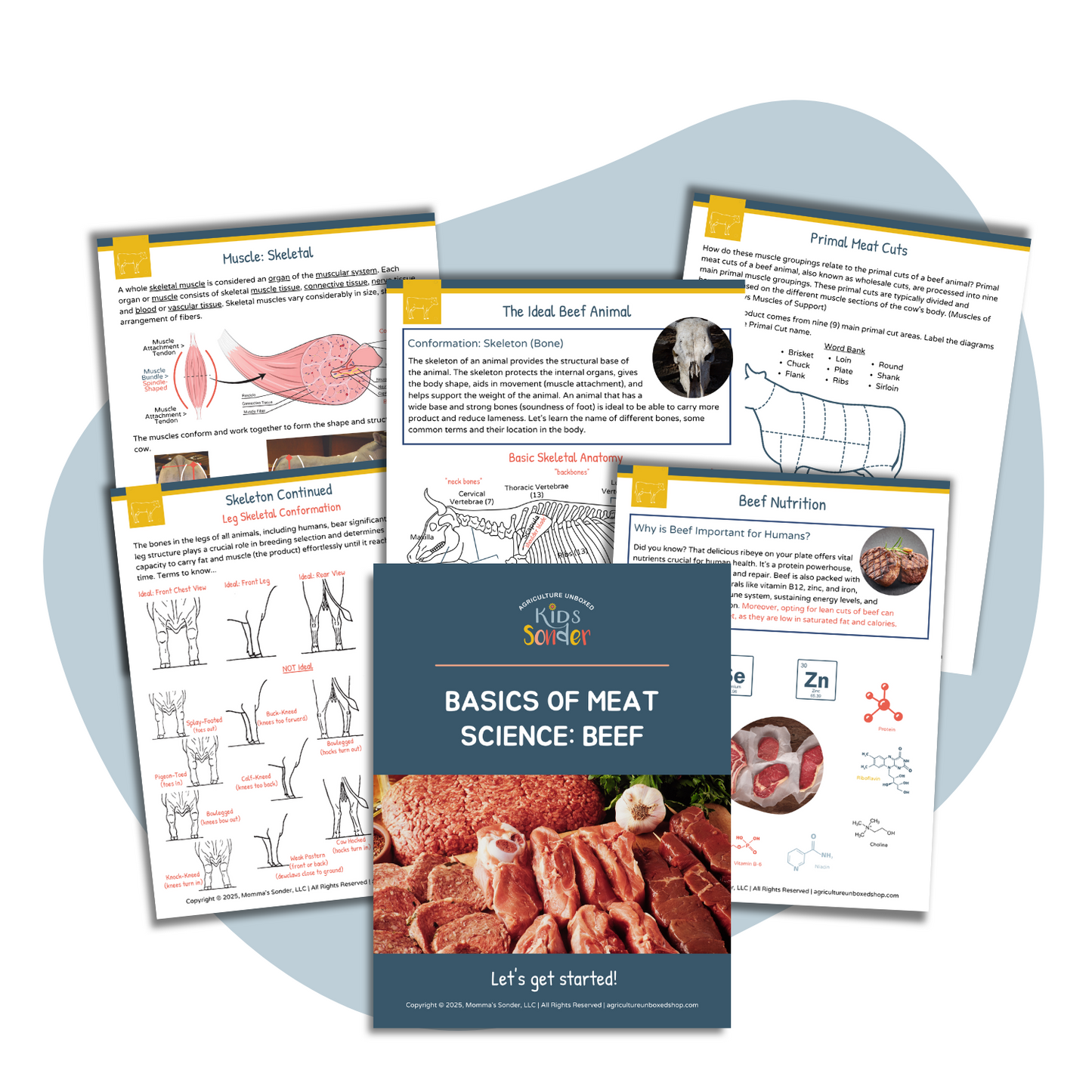
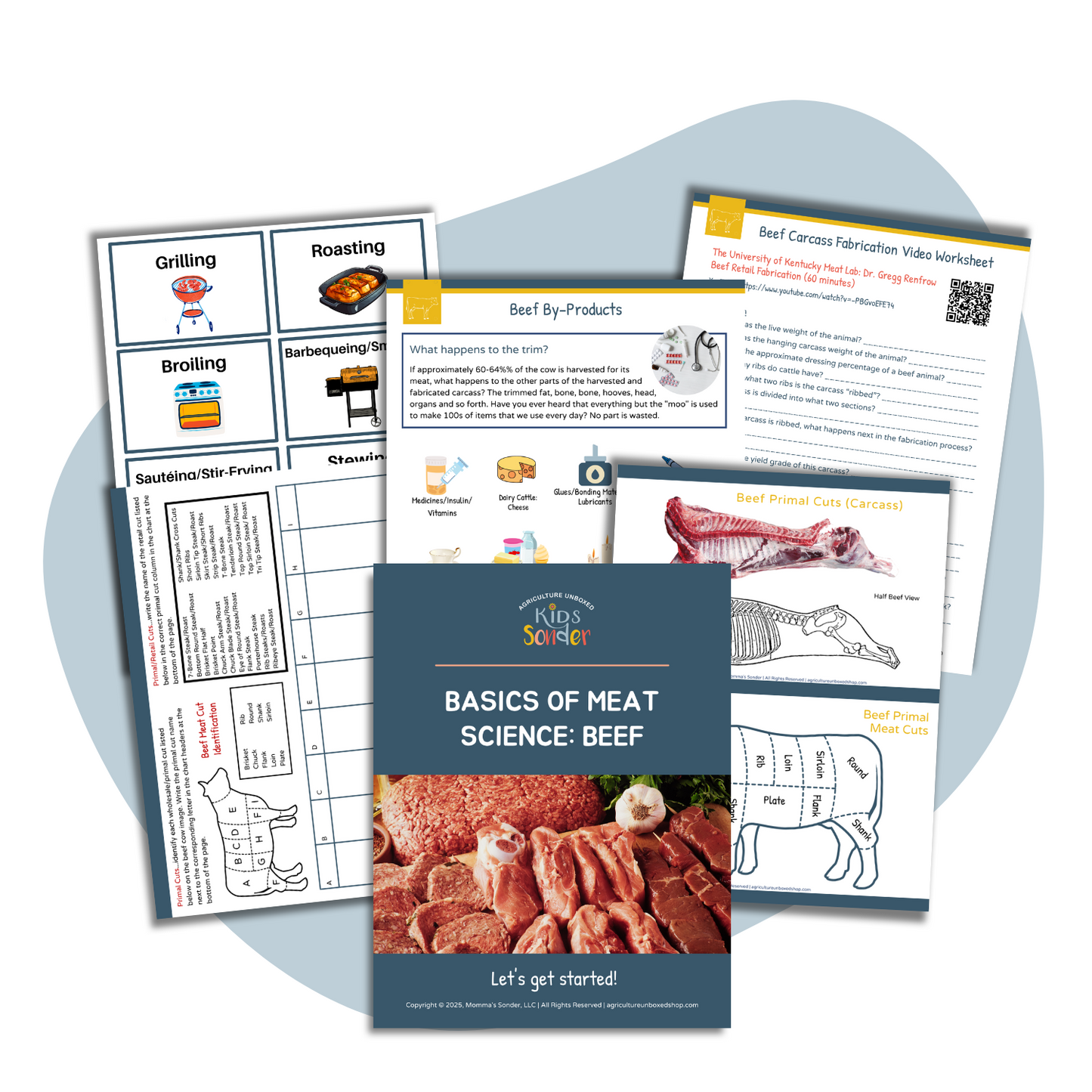
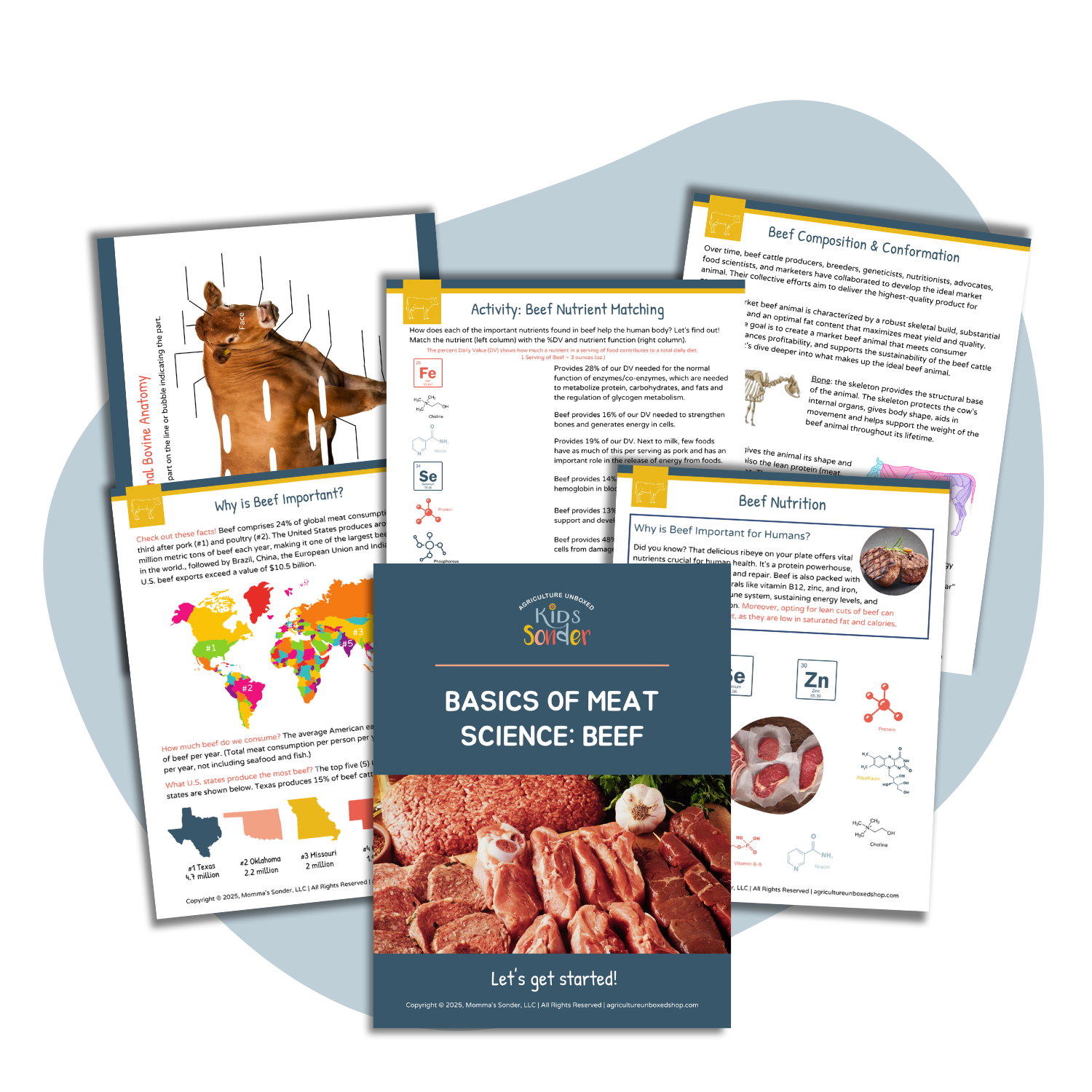
Learners investigate the anatomy and composition of beef cattle, including bones, muscles, and fat, and discover how these structures influence beef quality and carcass characteristics. They explore the nine primal cuts, identify retail beef cuts, compare cooking methods, and learn how a beef carcass is processed into the meat products consumers purchase.
Through reading, hands-on activities, model building, identification and classification, visual analysis, educational videos, and mathematical problem-solving, learners connect animal science, food science, and agricultural production. Using the Explore → Apply → Connect framework, this learning set helps learners understand how beef is produced, processed, and prepared while developing foundational agricultural science and STEM skills.
LEARNING OBJECTIVES
By the end of this unit, learners will be able to:
-
Explain the importance of the beef industry in U.S. agriculture and food production.
-
Identify external anatomical structures and major skeletal bones of a beef animal.
-
Describe the roles of bone, muscle, and fat in animal structure and carcass composition.
-
Distinguish between major muscle types and identify how muscle structure relates to meat production.
-
Identify the four major types of fat and explain how fat deposition relates to beef quality.
-
Identify and locate the nine beef primal cuts and classify retail cuts according to their primal origin.
-
Recognize characteristics of beef cuts, including bone, muscle, and fat, using visual references and identification cards.
-
Explain how muscle use, fat distribution, and cut location influence tenderness and cooking methods.
-
Compare dry-heat and moist-heat cooking methods and identify appropriate methods for different beef cuts.
-
Describe the basic process of beef carcass fabrication, from carcass to primal and retail cuts.
-
Identify nutrients provided by beef and explain its contribution to human nutrition.
-
Apply mathematical reasoning to estimate hot carcass weight, dressing percentage, chilled carcass weight, and take-home meat yield.
-
Connect meat science concepts to real-world beef production, processing, food preparation, and consumer decisions.
Unpacking the Lessons
The importance of beef in U.S. agriculture — Introduction: Why Is Beef Important? (15 minutes)
Human nutrition and the nutrients beef provides — Activity: Beef Nutrient Matching (30 minutes)
Cattle external anatomy — Activity: Basic External Bovine Anatomy Worksheet (20–30 minutes)
Beef conformation and composition: bone and skeletal structure — Activity: Skeletal Bone Identification and Modeling (90 minutes); Activity: Review Leg Skeletal Conformation (15 minutes)
Beef conformation and composition: muscle — Activity: Muscle Type and Primal Cut Identification (50 minutes); Activity: Muscle & Primal Cut Model (90 minutes)
Fat deposition and beef quality — Activity: Fat Deposition Map (50 minutes); Basic Introduction to Beef Quality (20 minutes)
Identifying beef primal and retail cuts — Activity: Primal/Retail Beef Cuts Identification (60+ minutes); Activity: Beef Meat Cut Identification Chart (45 minutes)
Understanding beef cooking methods — Activity: Cooking Method Definition Cards (60 minutes)
Exploring beef carcass fabrication — Activity: Beef Fabrication Videos and Comprehension Worksheets (90+ minutes)
Applying mathematics to beef carcass yield — Activity: Beef Carcass Math Worksheet (50 minutes)
Over 12 hours of learning activities
What You'll Receive
Basics of Meat Science: Beef (75+ Page Printable PDF): (instant digital download)
-
In-depth printable educational guide and activity set.
-
Full-color visuals, worksheets, identification activities, and learning resources.
-
Beginner, intermediate, and advanced activities to accommodate different levels of knowledge.
-
Guided exploration of beef anatomy, composition, quality, cuts, cooking methods, fabrication, and carcass math.
-
More than 12 hours of instructional material and activities.
This is a digital product: PDF FILE. Nothing physical will ship.
This product is copyrighted and not to be shared, duplicated, or resold. The purchaser of this product has permission to print copies of these materials for immediate family, classroom or group use (ONE COPY). This resource can not be shared with other teachers, group leaders or families. Each is required to purchase this resource, just like if this resource were a physical product.
Copyright © 2025, Momma's Sonder, LLC | All Rights Reserved | agricultureunboxedshop.com
Share