Swine: Pigs 101 (Printable PDF)
Swine: Pigs 101 (Printable PDF)
Couldn't load pickup availability
Recommended Age: 9–13
Format: Printable PDF
Learning Level: Beginner / Intermediate
Note: This product is also part of the Animal Science Foundations Bundle.
UNIT OVERVIEW
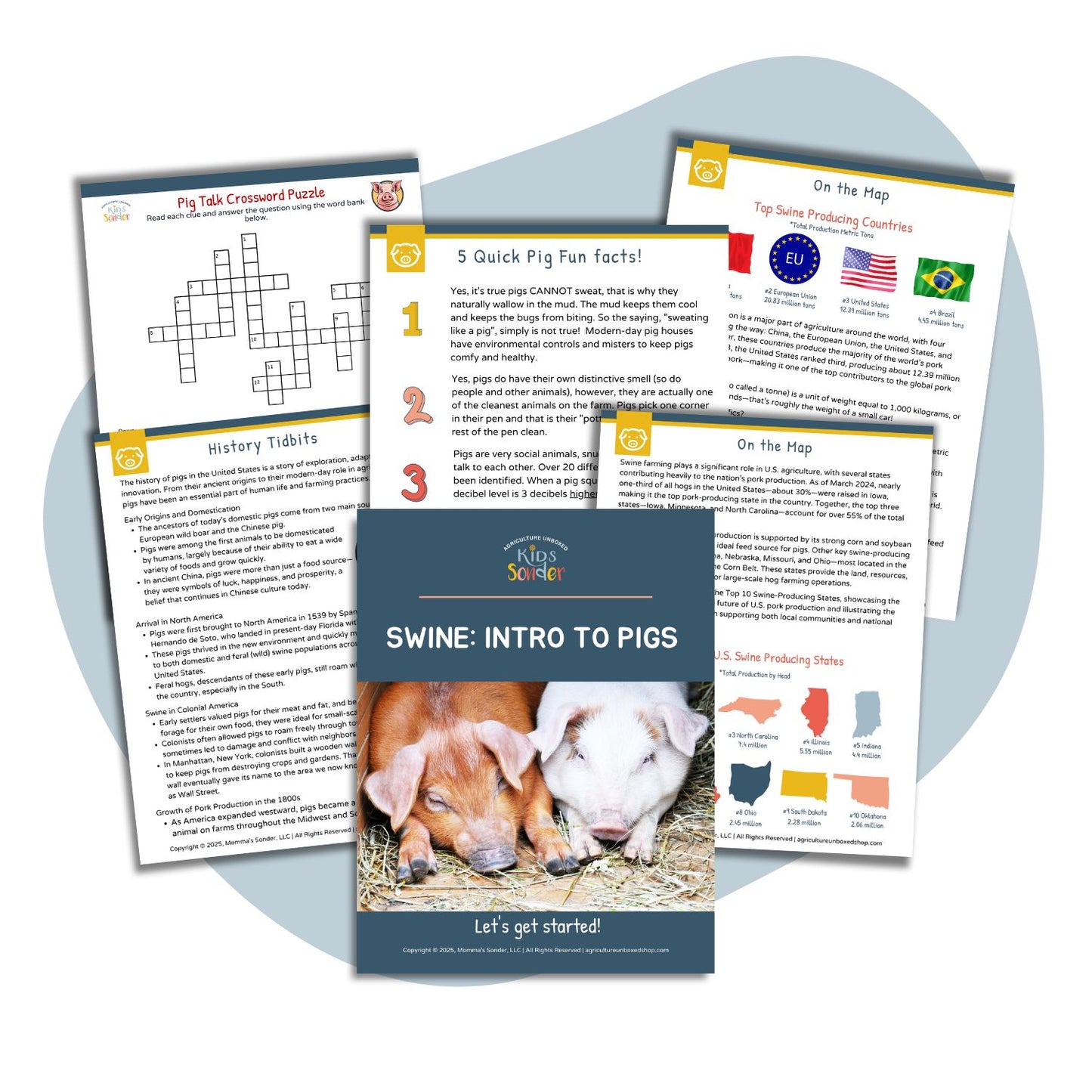
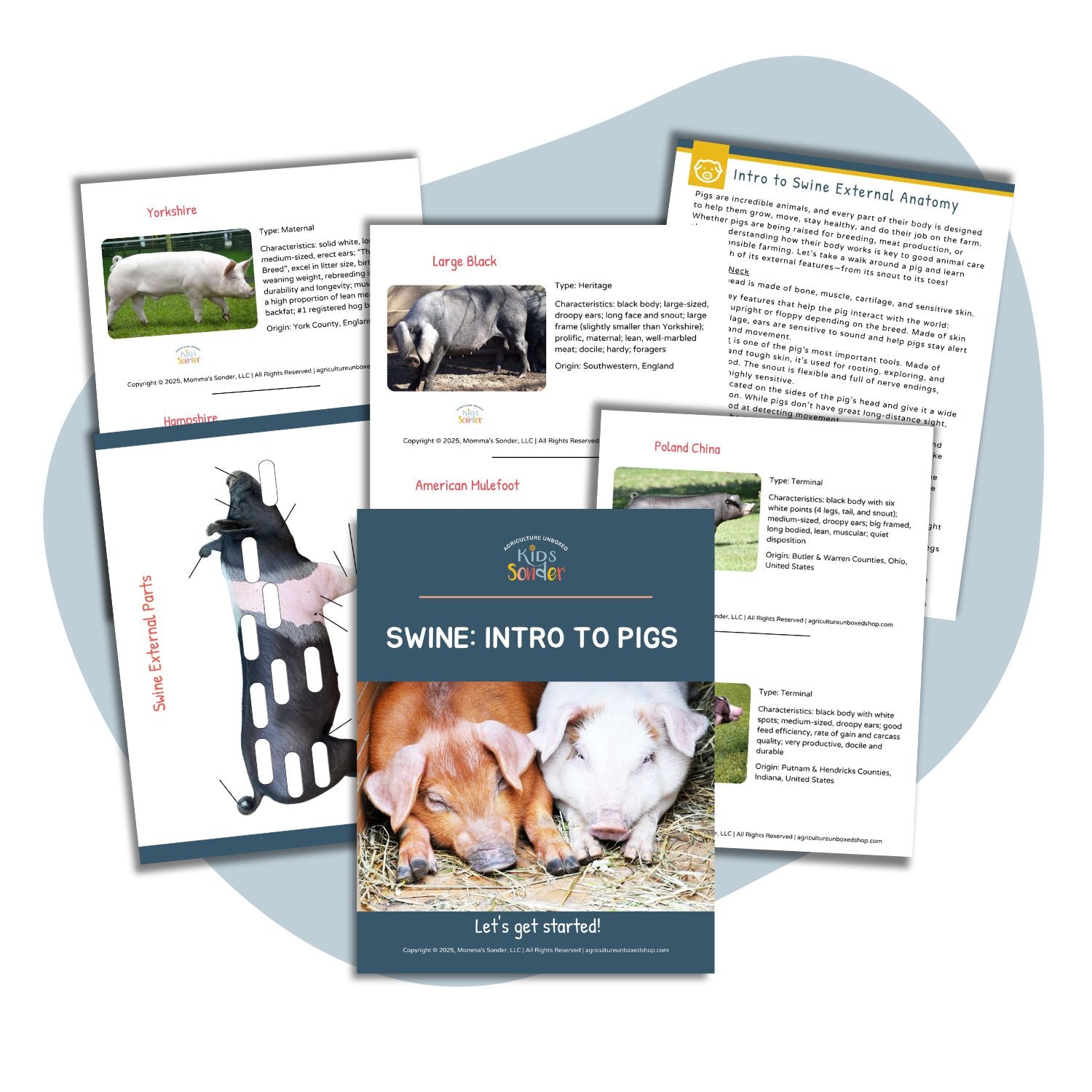
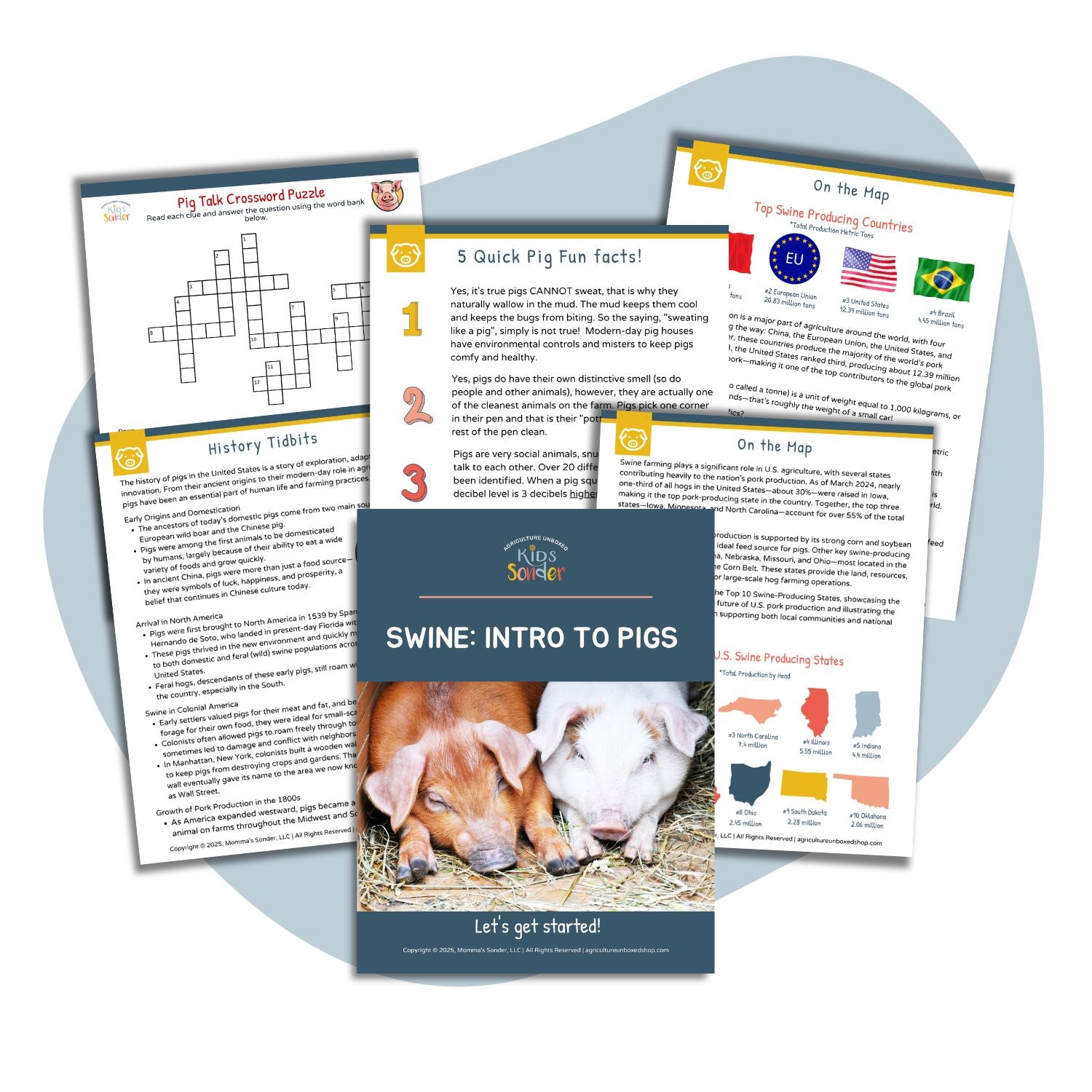
This unit introduces learners to the history, production, anatomy, and diversity of swine. Learners explore how pigs were domesticated and became an important livestock species, examine the leading swine-producing states in the United States, investigate interesting facts about pig behavior and biology, identify external anatomical structures, and compare swine breeds and their roles in agricultural production.
Through reading, mapping, research, identification activities, life cycle modeling, vocabulary development, and discussion, learners connect swine science to real-world agriculture. They investigate how geography and agricultural resources influence pork production, how pigs grow and develop, how anatomical structures support movement and function, and how breed characteristics contribute to different production goals.
LEARNING OBJECTIVES
By the end of this unit, learners will be able to:
- Describe the history of pig domestication and explain how swine became an important part of agriculture and food systems.
- Identify major historical developments that influenced swine production in the United States.
- Identify leading swine-producing states and explain how geography, feed resources, infrastructure, and technology contribute to pork production.
- Recognize the United States' role in global pork production and explain how the swine industry contributes to food systems and the economy.
- Identify common swine terminology, including sow, boar, gilt, barrow, piglet, litter, gestation, farrowing, and weaning.
- Describe the major stages of the swine life cycle, from birth through growth, finishing, and breeding.
- Explain the purpose of the major stages of swine production and identify basic developmental milestones.
- Identify major external anatomical structures of a pig and explain how these structures relate to movement, growth, health, and function.
- Compare swine breeds based on their origins, physical characteristics, and production roles.
- Distinguish between maternal, terminal, and heritage breed roles and explain how breed selection supports different agricultural goals.
- Interpret maps, charts, and informational resources to investigate patterns in U.S. and global pork production.
- Organize the stages of the swine life cycle and communicate how pigs develop from birth to market or breeding maturity.
UNPACKING THE LESSONS
History of Pig Farming - Activity: Evolution of Swine Collage (45-90 minutes)
Top 10 U.S. Swine-Producing States and World Exports - Activity: On the Map Coloring Sheets (~30+ minutes)
Pig Fun Facts - Activity: True/False Worksheet (30 minutes)
Swine Production Lifecycles - Activity: Lifecycle Narratives and Manipulative (~40 minutes); Activity: Pig Talk Crossword Puzzle (30 minutes)
Swine External Anatomy - Activity: Anatomy Identification Worksheets (~40 minutes)
Swine Breeds - Activity: Swine Breed Identification Cards (45+ minutes)
WHAT YOU'LL RECEIVE
-
70 (seventy) page, printable PDF lesson guide and activities, Reflection and Discussion Questions, and Extension Learning Activities.
- Bonus Swine Equipment images and use (6 pages)
This is a digital product: PDF FILE. Nothing physical will ship.
This product is copyrighted and not to be shared, duplicated, or resold. The purchaser of this product has permission to print copies of these materials for immediate family, classroom or group use (ONE COPY). This resource can not be shared with other teachers, group leaders or families. Each is required to purchase this resource, just like if this resource were a physical product.
Copyright © 2025, Momma's Sonder, LLC | All Rights Reserved | agricultureunboxedshop.com
Share